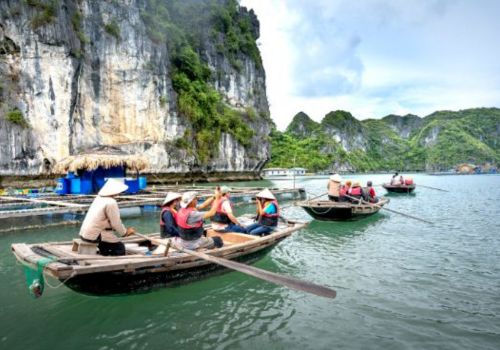
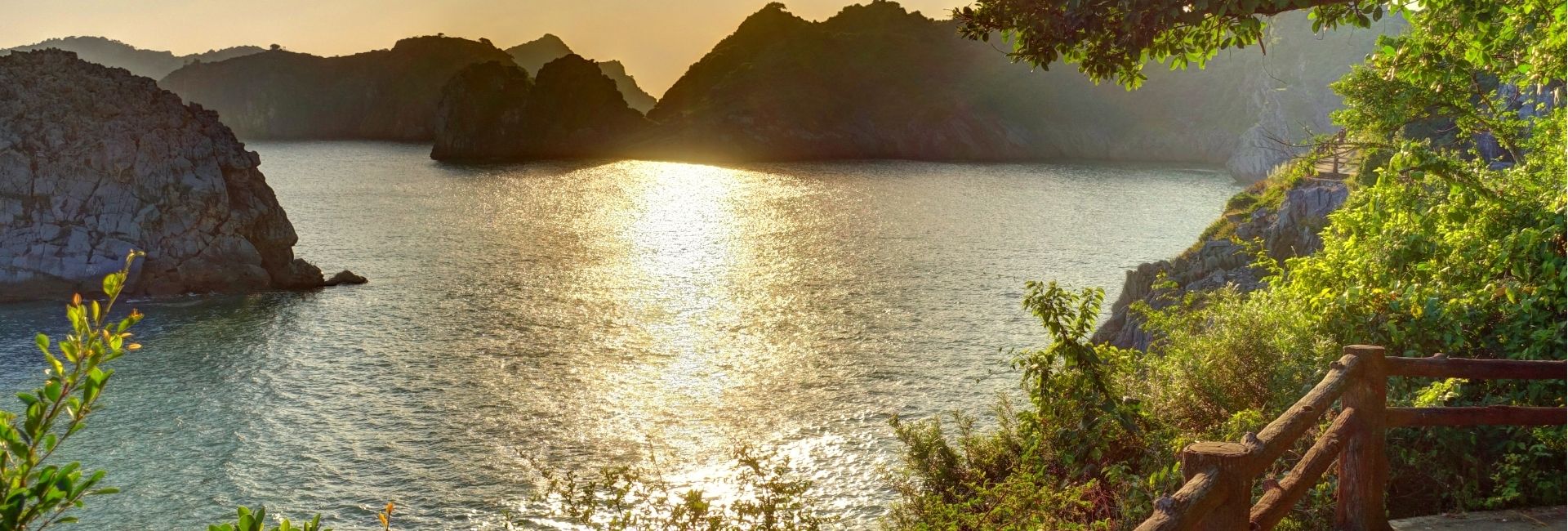
Perched on the largest island in Lan Ha Bay, Cat Ba National Park is one of northern Vietnam’s most rewarding natural escapes. It covers 263 square kilometres and holds UNESCO Biosphere Reserve status. Furthermore, it packs an extraordinary range of landscapes into a single destination: ancient tropical rainforest, dramatic limestone karsts, winding mangrove coastlines, and a thriving marine ecosystem just offshore. In short, it is raw, layered, and genuinely wild.
What makes Cat Ba truly irreplaceable is the Cat Ba langur. This critically endangered golden-headed primate exists absolutely nowhere else on earth. Fewer than 70 individuals remain in the wild. As a result, spotting one in the canopy above you is the kind of moment that stays with a traveller for life. Beyond that, the park supports 32 mammal species, over 70 bird species, 1,500 plant varieties, and 500-plus marine fish species. That combination is why researchers and nature lovers return again and again.
Best Time to Visit Cat Ba National Park
Timing your trip well makes a genuine difference here. Fortunately, Cat Ba rewards visitors in both seasons, just in different ways.
Dry Season: October to April
This is the sweet spot for most travellers. Temperatures sit between 20°C and 30°C. Trails are dry, accessible, and the views from the peaks are genuinely spectacular. In particular, December through February offers the coolest and least humid conditions. That makes it ideal for longer treks. However, accommodation in Cat Ba town fills fast during this window. Booking your stay well in advance is strongly recommended, especially around Vietnamese public holidays.
Wet Season: May to September
Do not write this period off entirely. The park transforms dramatically during the wet season. The forest reaches its most intensely green, and the waterfalls along trek routes run at full force. Additionally, trails are quieter, prices are lower, and the atmosphere is far more intimate. That said, some paths become slippery after heavy rain. Certain routes may also close temporarily, so checking current conditions before setting out is essential.
Not sure which season suits your travel style? Our team at Halong Junk Cruise can help you plan a private Cat Ba itinerary built around your dates. Get in touch here and we will sort the details.
Top Trails and Treks for Every Adventure Level
Cat Ba National Park’s trail network is one of its greatest strengths. It offers everything from a gentle forest stroll to a full-day mountain push. Moreover, knowing which trail matches your fitness level makes your experience far more satisfying. Here is how the options break down.
Easy: Kim Giao Forest Trail
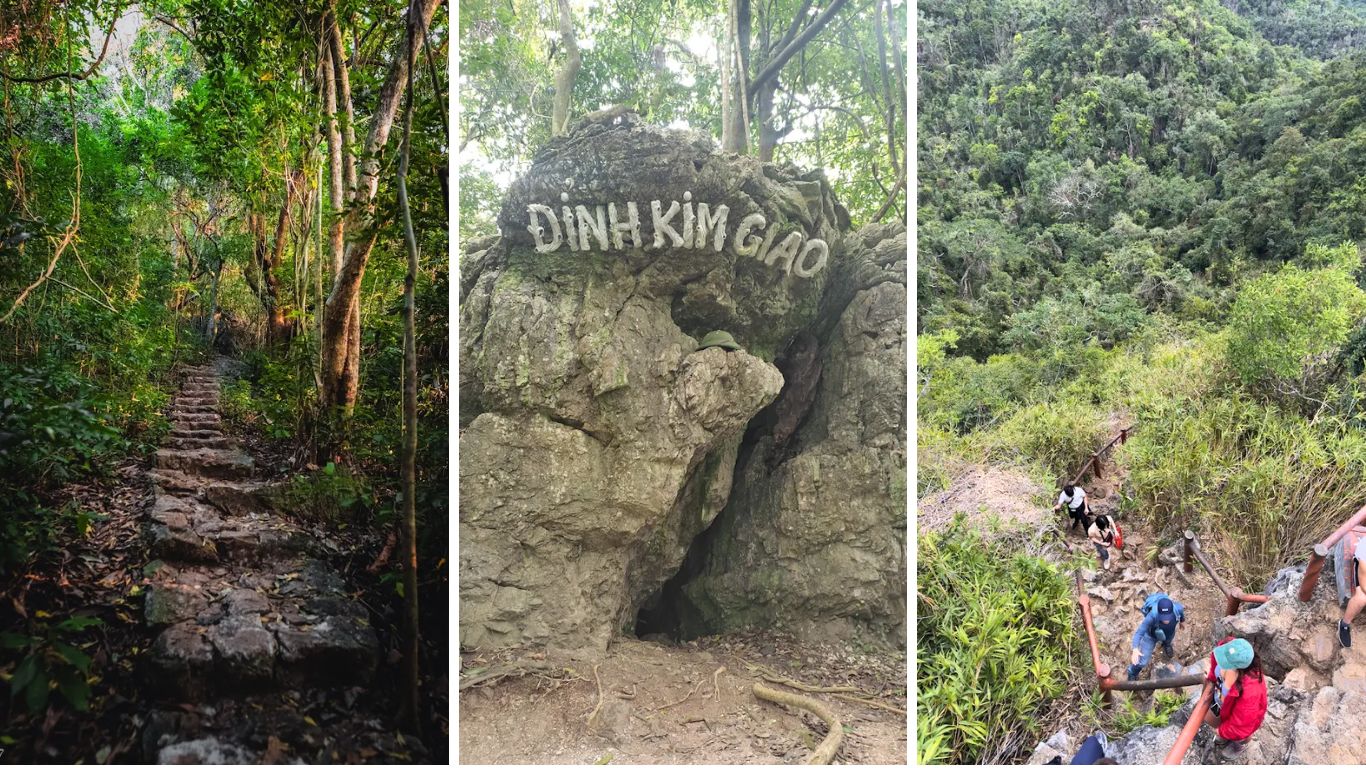
This is the park’s most accessible trail. It works perfectly for first-time visitors, families with children, or anyone who prefers a relaxed pace. The path winds through the ancient Kim Giao forest, named for a tree species found almost exclusively on this limestone island. Furthermore, the canopy filters the light beautifully. The undergrowth is rich with ferns and orchids, and the birdwatching along this stretch is consistently excellent. It is well-marked and does not require a guide. However, having one will deepen what you notice considerably.
Moderate: Ngu Lam Peak and Frog Lake
For those wanting a proper hike with a real payoff, the Ngu Lam Peak Trail delivers. A steady climb leads through forested slopes to a summit with 360-degree views. Below, you see the park’s green interior and the karst-dotted waters of Lan Ha Bay. Starting early keeps the heat manageable. It also gives you the best light for photography. Allow two to three hours for the return journey.
The Frog Lake Trek is another satisfying moderate option. Narrow paths push through dense forest before opening up at a peaceful interior lake. Cascading waterfalls line parts of the route. Additionally, the lake earns its name from the chorus of frogs filling the air at dawn and dusk. A local guide is a worthwhile investment here, as some sections are less clearly marked than the main peak trails.
Challenging: Cao Vong, Trung Trang Cave, and Viet Hai Village
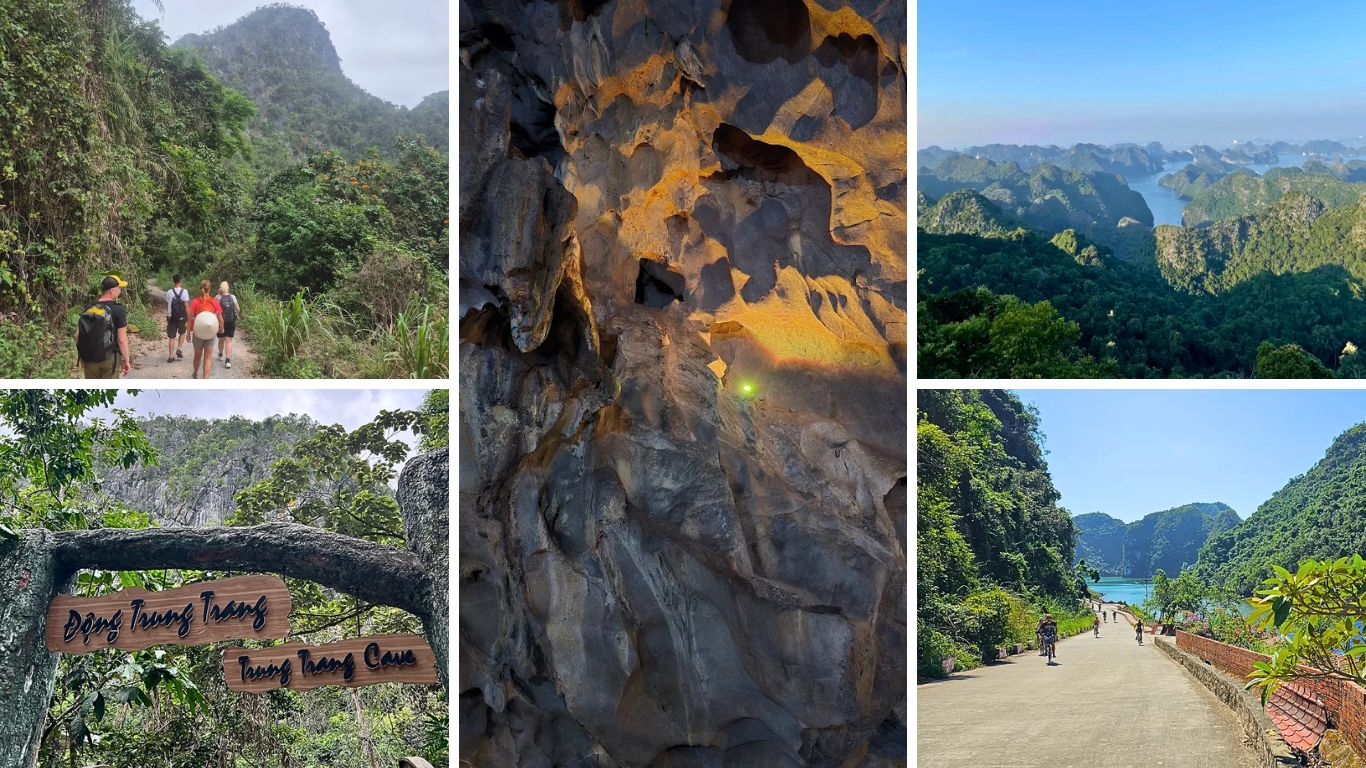
These are Cat Ba’s most demanding and most rewarding routes. Each one offers something genuinely distinct. Cao Vong Mountain is the island’s highest peak. It requires real endurance over steep and sustained terrain. However, the summit reward is exceptional: an uninterrupted panorama of forested ridges, the glittering coastline, and Lan Ha Bay’s karsts stretching toward the horizon. Proper trail footwear and a guide are non-negotiable here. Furthermore, this route is best avoided in wet season without experienced local support.
The Trung Trang Cave Trail cuts through thick jungle. It then arrives at one of Cat Ba’s most impressive limestone cave systems. Inside, cathedral-like chambers hold dramatic stalactites and stalagmites. Additionally, the forested approach offers some of the park’s best chances of hearing langurs and macaques overhead. Note that the cave carries a separate entrance fee. Bringing a personal headlamp is always a smart move.
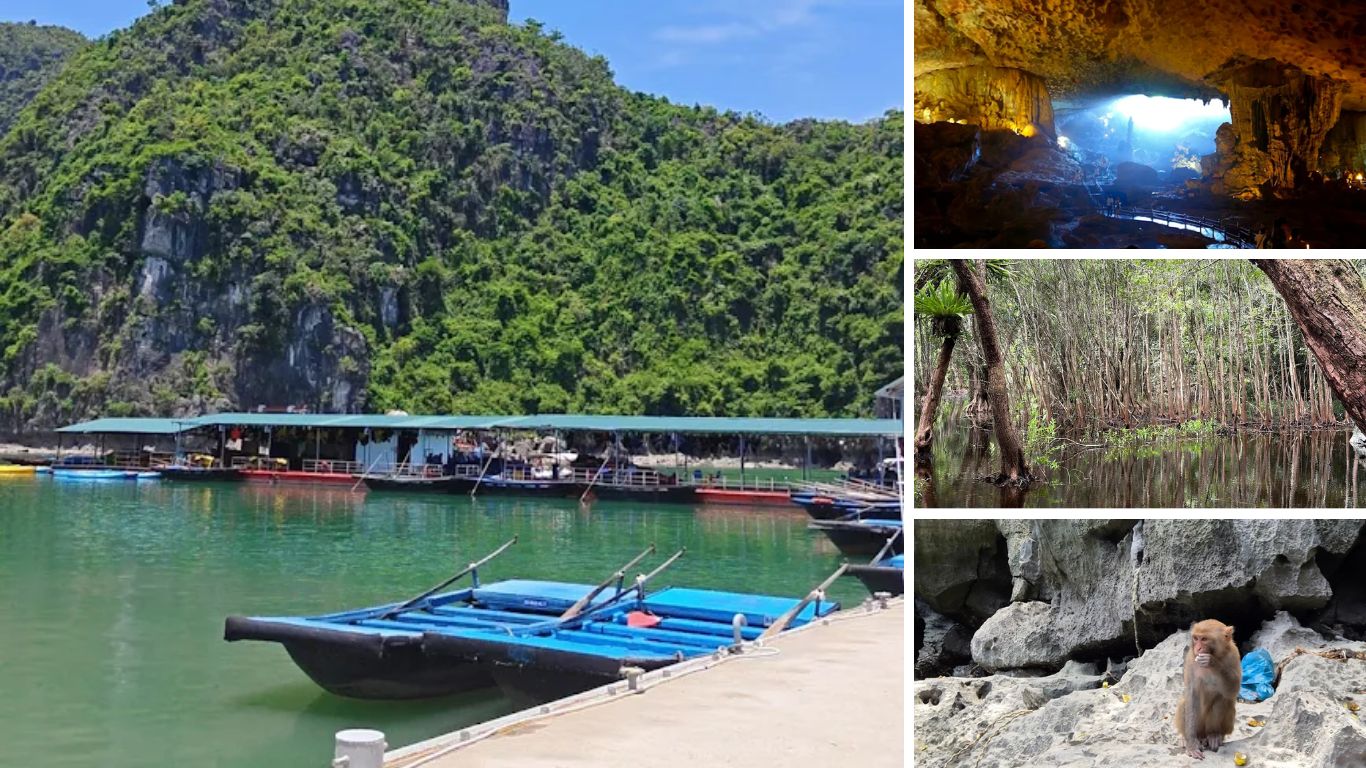
For something genuinely off the beaten path, the Viet Hai Village Trek stands apart. The trail pushes deep into the interior before emerging at a remote traditional fishing settlement. Many visitors choose to trek in and return by boat. That combination is both practical and scenic. Moreover, authentic home-cooked food and unhurried time with locals make this far more than just a hike.
Want all of this mapped out for you? Our 5-day Cat Ba Island private tour covers every trail, every ecosystem, and every logistical detail, so you simply show up and explore. No guesswork, no missed highlights.
Things to Do in Cat Ba Beyond the Trails
The national park is the headline act. However, Cat Ba Island has enough variety beyond its trail network to fill several days without repeating yourself. Whether you are travelling with a group, a family, or simply looking for something quieter between hikes, the island delivers on multiple levels.
Kayaking and Boat Tours in Lan Ha Bay
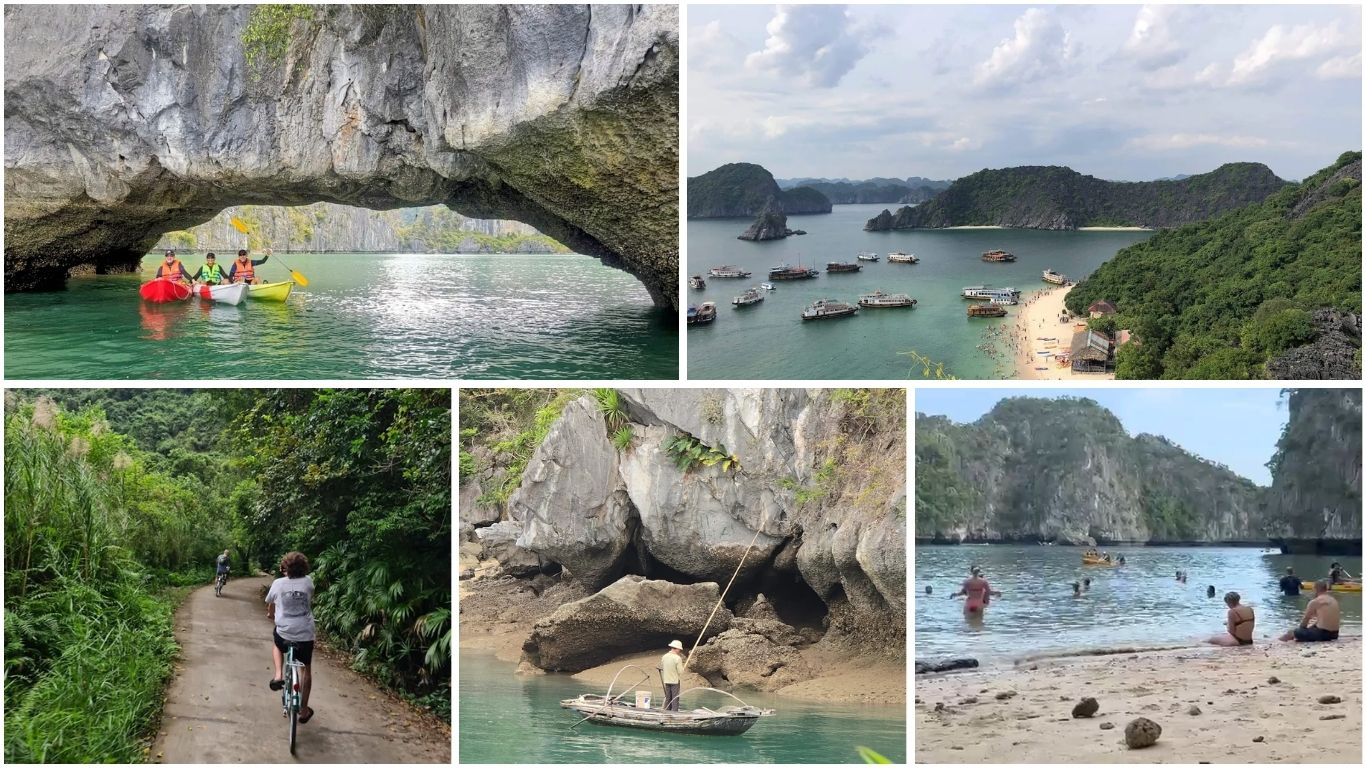
Getting out on the water is arguably as essential as any trail in the park. Lan Ha Bay’s sheltered lagoons, hidden beaches, and karst-framed coves are best explored at a slow pace by kayak. As a result, you reach spots that larger boats simply cannot access. Half-day and full-day kayaking tours depart regularly from Cat Ba town. Many private boat tours also combine paddling with snorkelling stops over the bay’s coral formations. For a more immersive experience, exploring the top fishing villages in Halong Bay by boat adds a genuine cultural layer to the day.
Rock Climbing
Cat Ba has quietly built a reputation as one of Southeast Asia’s most exciting rock climbing destinations. The limestone karsts offer routes for every level, from beginner to advanced. In particular, deep-water soloing draws experienced climbers between April and October when the water is warm enough. Several local operators in Cat Ba town offer guided climbing sessions with equipment included. That makes it accessible even for first-timers curious to try.
Snorkelling and Diving
The marine ecosystem surrounding Cat Ba Island is as rewarding below the waterline as the park is above it. Coral gardens, diverse reef fish, and clear visibility in the dry season make this a worthwhile addition to any itinerary. Snorkelling gear is available for hire from operators in Cat Ba town. Meanwhile, certified dive operators offer guided dives for those with experience. It pairs naturally with a boat day on Lan Ha Bay for a full water-focused itinerary.
Cat Ba Town and Hospital Cave
Cat Ba town itself deserves an evening of genuine exploration. The waterfront promenade is lively at dusk. The local market operates in the early morning and late afternoon. Overall, the pace is unhurried in a way that larger Vietnamese tourist towns rarely manage. Additionally, a short distance from town, Hospital Cave is a fascinating historical site. It is a three-storey natural cave system used as a secret military hospital during the Vietnam War. Guided visits bring the history to life in a way that a solo wander simply cannot.
Cat Ba’s Ecosystems: Why This Place Is Extraordinary
Few destinations in Southeast Asia compress this level of ecological diversity into such a compact area. Furthermore, understanding what makes each habitat tick adds real depth to time spent in the park. From the forest canopy to the seafloor, every layer here has a story worth knowing before you arrive.
Rainforest and Karst Interior
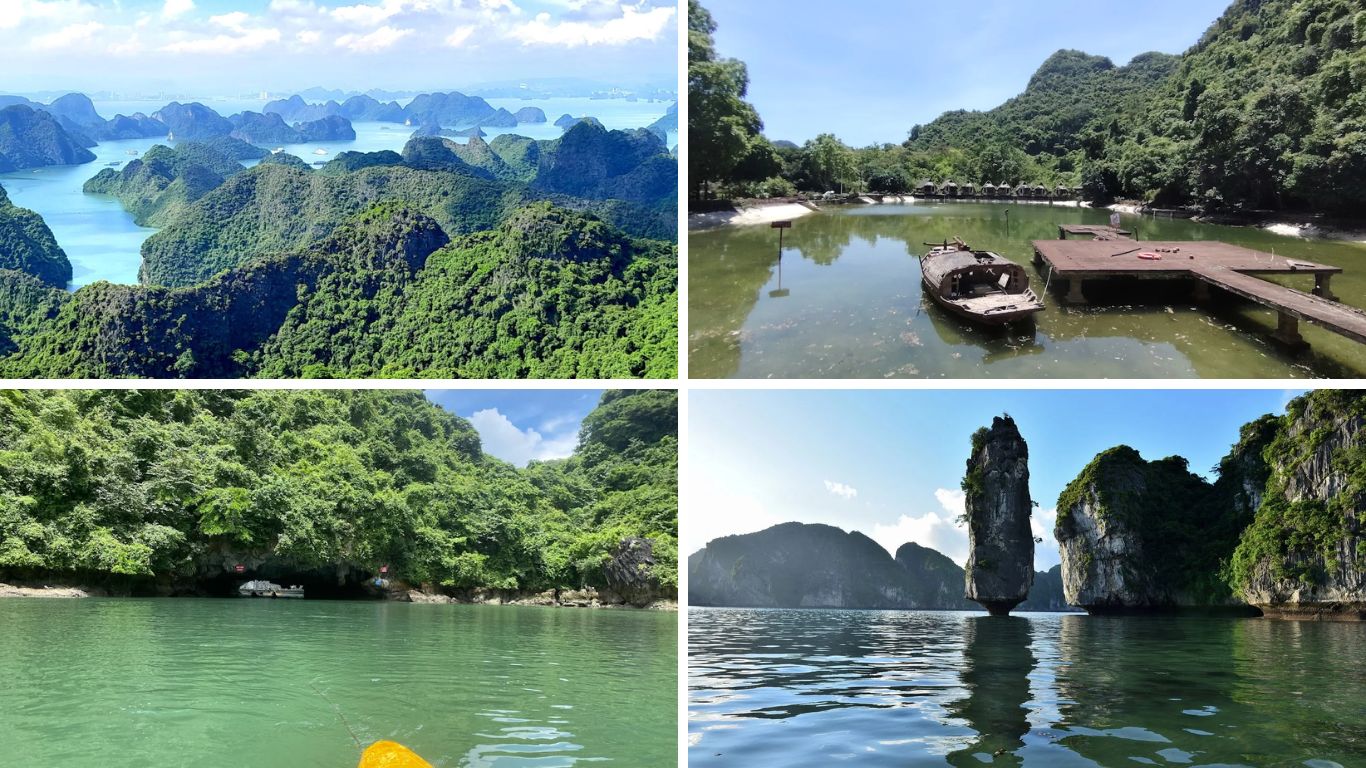
The island’s forested interior is anchored by a dense multi-layered canopy of hardwood trees. Below it, an extraordinarily rich understory of orchids, mosses, ferns, and climbing plants thrives. This is the core habitat for the Cat Ba langur, wild boar, deer, and several macaque species. Moreover, the forest functions as the island’s watershed, feeding the streams that run toward the coast and sustaining the mangrove habitats below.
Rising through and above the forest, the limestone karst formations create their own distinct microhabitat. Vertical cliff faces, cave systems, and rocky overhangs shelter rare ferns, roosting bat colonies, and cave-dwelling invertebrates. Beyond that, these formations give Cat Ba its most recognisable visual character. They also connect the land directly to the dramatic seascape of Lan Ha Bay beyond the island’s edge.
Mangroves and Marine Habitat
The sheltered coastal inlets of Cat Ba are lined with mangrove forests. These play a quietly critical ecological role. They act as nursery habitat for juvenile fish and protect the coastline from erosion. Additionally, they provide rich feeding grounds for herons, kingfishers, mudskippers, and fiddler crabs. Exploring the mangroves by kayak or small boat is one of the most peaceful ways to spend an afternoon. The experience is also entirely different from anything you will find on the trail network.
Extending into Lan Ha Bay, the marine ecosystem supports over 500 fish species alongside diverse coral formations. Snorkelling and diving access points along the island’s eastern coast make this habitat accessible even for beginners. Furthermore, water clarity in the dry season is reliably good. For those combining the park with time on the water, our guide to Lan Ha Bay cruises is worth reading before you plan your days on the island.
How to Get to Cat Ba National Park
Getting to Cat Ba from Hanoi is straightforward. Moreover, there are now more options than ever, including one that has genuinely transformed the journey for the better. Here is what each route looks like in practice.

The Classic Route: Bus and Ferry
This is the most popular option for independent travellers. A limousine bus from Hanoi takes you to Hai Phong. From there, a speed ferry runs directly to Cat Ba Island. The total journey takes roughly two and a half to three hours. Combined tickets cost around 300,000 VND per person one-way. It is reliable, affordable, and well-established. However, the USD equivalent shifts with exchange rates. Always verify the current conversion before budgeting your trip.
The Cable Car: A Journey Worth Making
The Cat Hai to Phu Long cable car is one of the longest overwater cable cars in the world. It has also changed the way many travellers approach Cat Ba entirely. Rather than waiting at a ferry terminal, you glide above the bay. Sweeping aerial views of the karst landscape stretch below you in every direction. From the Phu Long terminal, a local bus or taxi connects you onward to Cat Ba town. In short, this is not just a transport option. It is a highlight in its own right.
Private Transfer
For families, groups, or anyone prioritising comfort, a private car transfer from Hanoi removes every logistical friction point. Your luggage stays with you. There is no switching between buses or waiting at ports. Furthermore, the journey runs entirely on your schedule. Our team can arrange private transfers as part of a broader Cat Ba or northern Vietnam itinerary. Contact us here to discuss what works best for your group.
By Cruise
Arriving at Cat Ba by boat is arguably the most cinematic approach available. Several cruise operators departing from Halong Bay include Cat Ba Island as part of a wider bay itinerary. Gliding past limestone towers rising directly from the water before reaching the island is something photographs simply cannot replicate. For travellers combining Halong Bay and Cat Ba in a single trip, this is the natural and scenic choice. You can explore our cruise options directly at Halong Junk Cruise.
Getting Around Cat Ba Island
Once you arrive on Cat Ba, getting around is refreshingly simple. Matching the right transport to each part of your visit also makes a real difference to how much you can cover comfortably.
Within the national park, most trails are accessible on foot from the park entrance. That entrance sits within easy walking distance of Cat Ba town. For exploring the island’s coastal roads and quieter villages, bicycle rental is a genuinely enjoyable option. Bikes are available throughout Cat Ba town at roughly 50,000 to 100,000 VND per day. In particular, the flat stretches along the southern coast are especially pleasant in the early morning before the heat builds.
For reaching more remote trailheads, motorbike and scooter rentals give you full flexibility. It is also widely available in town. However, confirming current licence requirements before renting is always sensible. For demanding treks such as Cao Vong Mountain and Viet Hai Village, hiring a local guide adds both safety and local knowledge. If mangrove exploration or access to hidden lagoons of Lan Ha Bay is on your list, boat and kayak hire fills the gaps that land transport simply cannot reach.
Entrance Fees and Practical Costs
Budgeting for Cat Ba National Park is straightforward. The main entrance fee sits at 80,000 VND for adults and 40,000 VND for children. Beyond the gate, however, a few additional costs are worth knowing before you arrive.
The Trung Trang Cave carries a separate entrance fee payable at the site. Guide fees vary depending on trail difficulty and group size. These are best arranged through your accommodation the evening before or at the park entrance on the morning of your trek. Bicycle rental runs between 50,000 and 100,000 VND per day. Meanwhile, boat and kayak hire vary by operator and trip length. Most importantly, card payment is not reliably available at the park or with smaller operators. Therefore, carrying sufficient Vietnamese Dong in cash before leaving Hanoi or Hai Phong is strongly advised.
What to Pack and Prepare Before You Go
A little preparation goes a long way in Cat Ba. This is especially true if you are planning serious time on the trails rather than simply passing through.
First, book accommodation well in advance for the dry season. Cat Ba town fills quickly around public holidays. Additionally, deciding on your transport route before you travel and pre-booking where possible saves time and stress on arrival. On the trail, lightweight and moisture-wicking clothing is the practical choice. Pair it with a waterproof layer for the sudden weather shifts that can occur even in dry months. Moreover, proper hiking shoes with real grip are genuinely important. The challenging routes should not be attempted in sandals or flat-soled trainers.
For your day pack, the essentials are:
- High-SPF sunscreen, because UV intensity is serious even on overcast days
- A wide-brim hat for exposed ridge sections and open summit terrain
- A reusable water bottle, with refill points available at the park entrance
- Personal medications and basic first aid, including blister plasters and antiseptic
- Bug repellent: mosquitoes are prevalent throughout the park, particularly near the mangroves. A DEET-based repellent is the most effective protection and should be considered non-negotiable
Finally, ensure your travel insurance explicitly covers outdoor trekking activities. Standard policies sometimes exclude hiking on unmarked or elevated terrain. It is a small check that can matter enormously if something goes wrong on a remote trail.
Where to Eat in Cat Ba: What and Where to Try
Cat Ba’s food scene is unpretentious, fresh, and deeply tied to what comes out of the surrounding waters each morning. Eating well here is less about finding the right restaurant and more about knowing what to order.
Seafood: The Non-Negotiable
Fresh seafood is the reason to eat on Cat Ba. The island’s proximity to the Gulf of Tonkin means what arrives on your plate was almost certainly in the water that morning. In particular, look out for:
- Horseshoe crab (Sam bien): a Cat Ba speciality, typically grilled or steamed and served with a dipping sauce
- Grilled squid (Muc nuong): simple, smoky, and consistently excellent at open-air spots near the waterfront
- Steamed clams and cockles: ordered by weight, served with fresh herbs and a sharp lime and chilli dip
- Ca Hap: whole steamed fish, usually sea bass or grouper, brought to the table with ginger, spring onion, and soy
The stretch of seafood restaurants along Cat Ba town’s harbour front is the most straightforward place to eat well. Prices are reasonable, portions are generous, and pointing at the tank to choose your own catch is entirely normal.
Local Dishes Worth Ordering
Beyond the seafood, a few Cat Ba dishes deserve a specific mention:
- Bun ca: a lightly spiced fish noodle soup eaten by locals for breakfast. Available from small street stalls from around 6 am and gone well before 9 am
- Banh da cua: crab noodle soup with a rich, slightly sweet broth. It is a Hai Phong regional speciality that Cat Ba does particularly well
- Com rang hai san: fried rice loaded with mixed seafood. A reliable and satisfying option at almost any local restaurant on the island
Where the Locals Eat
The best meals on Cat Ba are rarely found closest to the main tourist strip. Instead, a short walk back from the waterfront into the residential lanes behind Cat Ba town uncovers smaller family-run kitchens. The menu is shorter, the prices are lower, and the food is noticeably better. Your accommodation can almost always point you toward a specific spot worth trying. Taking that recommendation seriously is always the right move.
Combining Cat Ba with a North Vietnam Itinerary
Cat Ba National Park pairs naturally with the wider landscapes of northern Vietnam. Furthermore, building it into a broader itinerary creates one of the most satisfying travel routes in the entire region.
The most natural combination is Cat Ba alongside Lan Ha Bay and Halong Bay. Cat Ba Island sits at the southern edge of the Halong Bay UNESCO World Heritage Zone. Lan Ha Bay forms its immediate marine border. In fact, many travellers who have experienced both consider Lan Ha Bay the superior choice: equally dramatic limestone scenery, far fewer tourist vessels, and a quieter atmosphere on the water. Our guide to the top fishing villages worth visiting in Halong Bay is a useful companion read if you are planning time on the water.
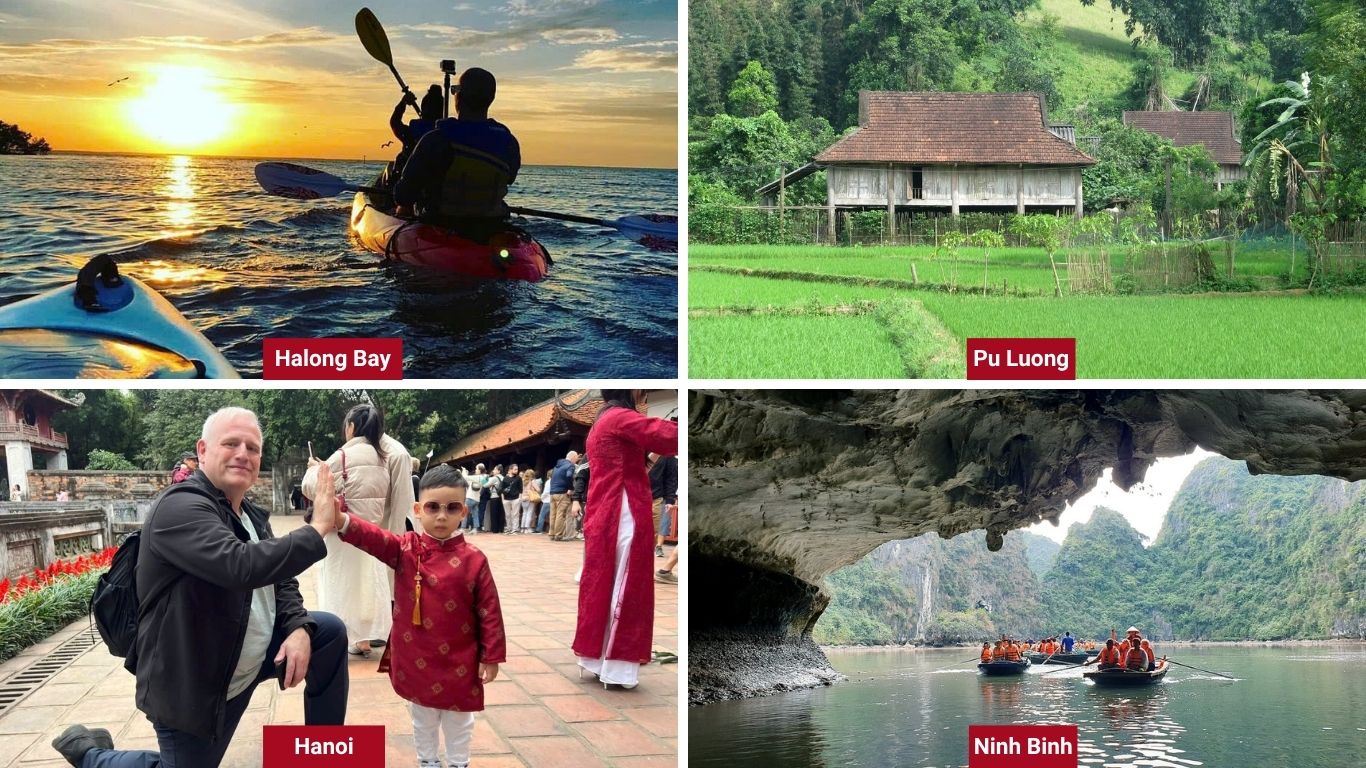
A practical itinerary that works well for most visitors looks like this: two to three nights in Hanoi to orient, followed by an overnight Halong Bay or Lan Ha Bay cruise, then two to three nights based in Cat Ba town. For those with more time, our 5-day in-depth Cat Ba Island tour covers the full trail network at a genuinely unhurried pace. Alternatively, if you want something broader that weaves Hanoi, the bay, and Cat Ba into one seamless journey, the Tonkin Elegance 8-day tour is worth a close look. Either way, reach out at resa@halongjunkcruise.com and our team will take it from there.
Frequently Asked Questions About Cat Ba National Park
Is Cat Ba National Park worth visiting? Absolutely. The combination of the world’s rarest langur, varied trails, mangrove coastline, and direct access to Lan Ha Bay makes it one of northern Vietnam’s most rewarding stops.
How many days do you need? Two to three days covers the highlights, though three to four gives you a more comfortable pace across the full trail network.
Can you visit independently? Easier trails are straightforward alone, but a local guide is strongly recommended for the more demanding routes.
What is the Cat Ba langur? A critically endangered golden-headed primate found nowhere else on earth, with fewer than 70 individuals remaining in the wild.
Can you combine Cat Ba with Halong Bay? Yes,Cat Ba borders Lan Ha Bay, which connects directly into the wider Halong Bay zone, and most visitors combine both in a single trip.
Is it suitable for families? Yes, the Kim Giao Forest Trail works well for younger children, and a private tour can be shaped entirely around your family’s pace.