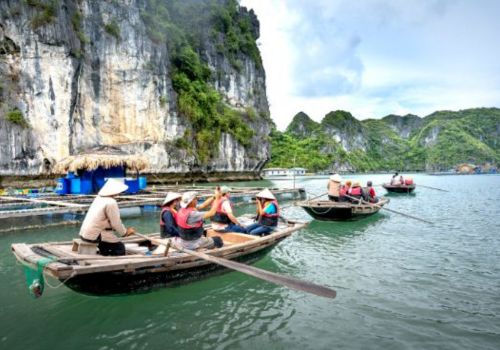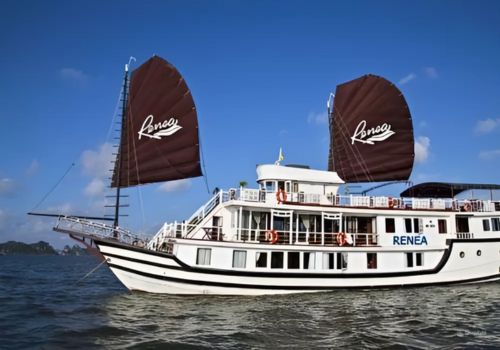

Have you ever thought of planning a tour from Halong Bay to Sapa? This will be a special tour, from the sea to the forest. You can just experience a windy and sunny bay, and right after that is an immense, cool mountain forest. Let’s take some time with your loved ones to make the best trip to these two most beautiful places in North Vietnam.
Best time to visit Halong Bay and Sapa
Timing matters more on this route than almost anywhere else in Vietnam, because you’re planning for two destinations with slightly different climates at the same time. The good news is that two seasons work beautifully for both.
Spring: March to May
Spring is arguably the most photogenic time to do this trip. In Sapa, the hillsides and roadsides come alive with blooming flowers, and the weather stays dry, cool, and genuinely pleasant for trekking through Black Hmong and Red Dao villages, cycling through the Muong Hoa valley, or simply wandering between rice paddies at your own pace. In Halong Bay, skies are clear and blue through these months, making it ideal for kayaking through hidden lagoons, exploring cave systems like Sung Sot and Thien Canh Son, and spending long afternoons on deck watching the karst landscape drift past. Visibility on the water is at its best, and the humidity hasn’t yet climbed to its summer peak.
Autumn: September to November
Autumn is the other golden window, and for many experienced travelers, it edges out spring as the top pick. Sapa’s terraced fields turn a deep, brilliant yellow during harvest season, creating some of the most photographed landscapes in all of Vietnam. It is also the best time for village trekking, visiting Bac Ha Sunday market, and joining local families during the rice harvest itself, an experience that very few travelers think to seek out but almost none forget. Halong Bay in autumn is consistently sunny with calm waters, making swimming, squid fishing at night, and sunrise kayaking particularly rewarding. Importantly, the typhoon season has largely passed by October, meaning cruise cancellations become far less of a concern.

What to Avoid
June through August brings heat, humidity, and the real risk of tropical storms in Halong Bay. December through February can be bitterly cold and foggy in Sapa, which affects visibility on treks and can make the experience feel more challenging than magical.
How to Get from Halong Bay to Sapa
The distance between Halong Bay and Sapa is around 400 kilometers, so choosing the right transport makes a real difference to how rested and ready you feel when you arrive.
By Direct Shuttle Bus
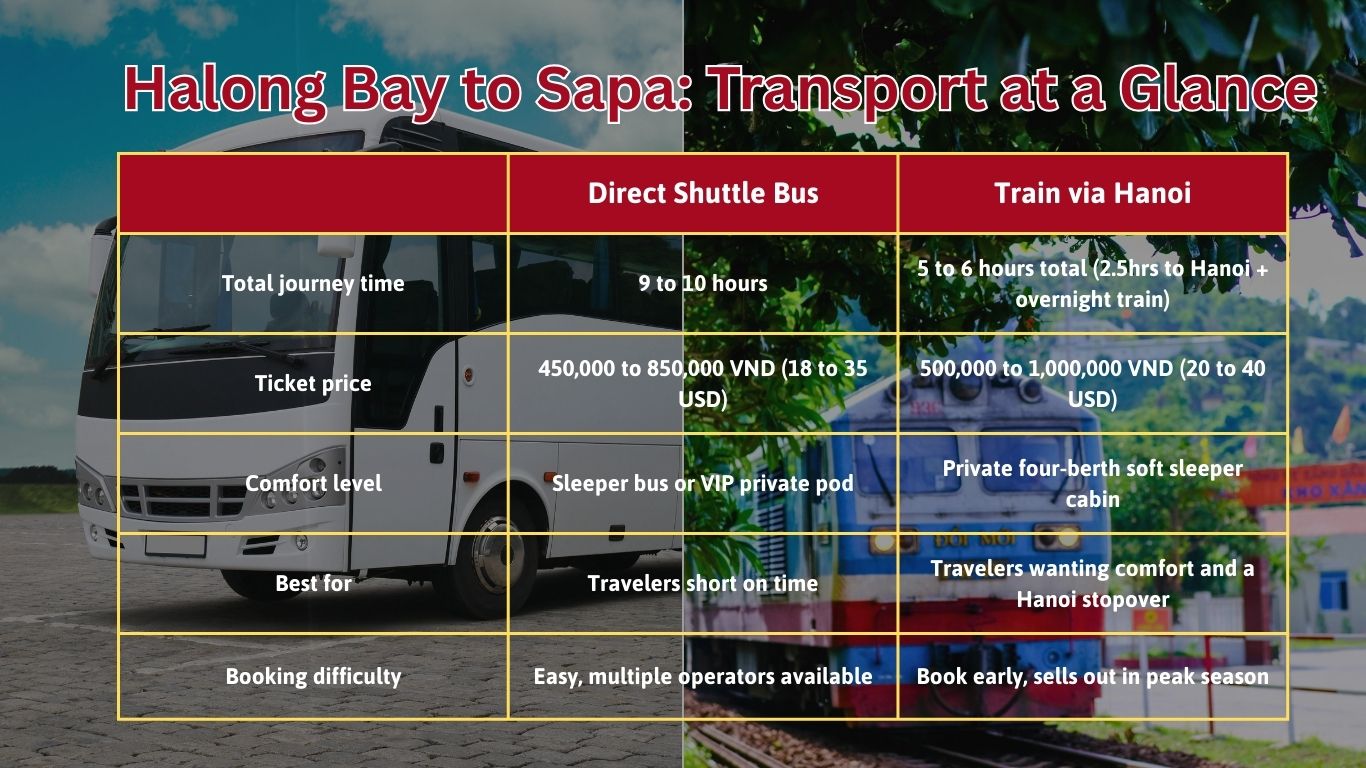
Several bus operators run directly from Halong Bay to Sapa without requiring a stop in Hanoi, making it the most convenient option for anyone on a tighter schedule. Buses typically depart from Tuan Chau, Bai Chay, or Hon Gai in Halong Bay, and the journey takes around 9 to 10 hours.
Most operators run luxury sleeper buses with air conditioning, blankets, WiFi, and cold towels included. VIP cabin options with private pods and individual climate control are also available on some services for a more comfortable ride. Two departure windows run daily, morning and evening, and tickets generally range from 450,000 to 850,000 VND (approximately 18 to 35 USD) depending on the operator and cabin class.
By Train via Hanoi
The train option takes a little more planning but is widely considered the most comfortable and scenic way to make this journey. From Halong Bay, take the expressway to Hanoi in around two and a half hours by car, then board the overnight train from Hanoi to Lao Cai station. From Lao Cai, Sapa is a further 30 minutes by road.
Night trains from Hanoi typically depart between 9 pm and 10 pm and arrive at Lao Cai early the following morning. Tickets range from 500,000 to 1,000,000 VND (approximately 20 to 40 USD) depending on cabin class. The private four-berth soft sleeper cabins are worth the upgrade for a more restful night.
Expert Tip on Choosing Your Route
If your time is limited, the direct shuttle bus saves a day. If you have a day to spare, the train via Hanoi is a rewarding journey in itself, and Hanoi’s Old Quarter, street food scene, and Hoan Kiem Lake are genuinely hard to rush past. For families, travelers with heavier luggage, or anyone who simply wants door-to-door comfort with no logistical friction, a private transfer is the smoothest option of all. The Halong Junk Cruise team can arrange this as part of a combined package. Reach out to us at resa@halongjunkcruise.com for a tailored quote.
How Many Days Do You Need?
This is one of the most searched questions about this itinerary, and the honest answer depends on how deeply you want to experience each place.
Six days is the practical minimum to do both destinations justice without feeling rushed. It gives you one night on the bay and two full days in Sapa, which covers the highlights comfortably.
Eight days is the sweet spot for most travelers. The extra time allows for a two-night cruise on Halong Bay, which transforms the experience considerably, plus three days in Sapa for trekking, village visits, and at least one spontaneous morning with no plans at all.
Ten days or more opens up the itinerary properly. You can add Ninh Binh before Halong Bay, extend your time in Sapa to include Bac Ha market on a Sunday, or continue northward to Ha Giang for one of the most dramatic motorbike loops in Southeast Asia.
Where to Stay
In Halong Bay
Your accommodation on this leg of the trip is your cruise ship, and choosing the right one matters more than most travelers realize. A one-night cruise covers the basics, but two nights allows the itinerary to reach quieter parts of the bay that day-trippers never see. If you’re arriving at Halong Bay after a long journey, lean toward a more relaxed, comfort-focused cruise rather than an activity-heavy one. Your body will thank you for it.
In Sapa
Sapa town center is the most practical base, with restaurants, cafes, and tour operators all within walking distance. It suits travelers who want convenience and don’t mind being around other tourists in the evenings. For a completely different experience, homestays in the valley villages of Ta Van or Lao Chai put you directly inside the landscape, with rice terraces outside the window and the sounds of village life replacing traffic. These are especially memorable for couples and solo travelers, though comfort levels vary, and reading recent reviews before booking is strongly recommended.
Cultural Etiquette in Sapa’s Villages
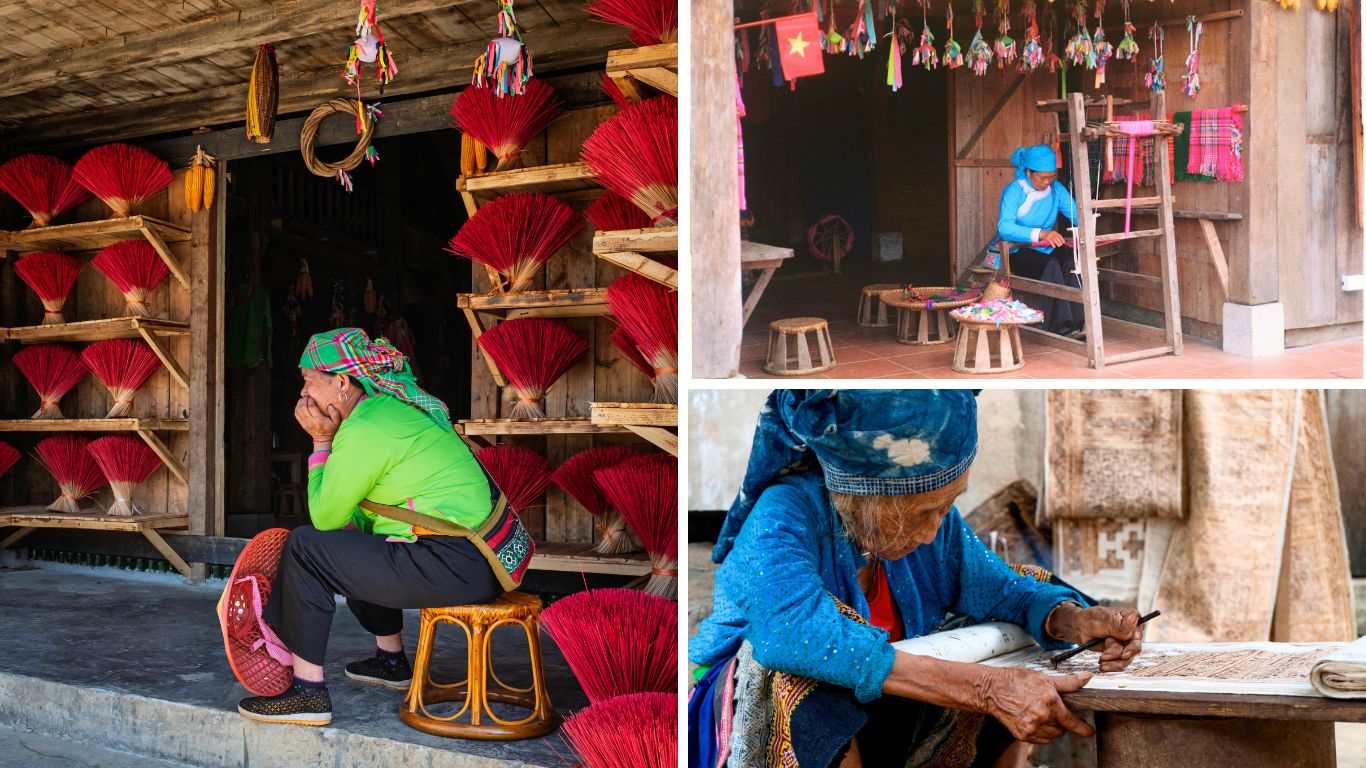
Visiting ethnic minority communities in the Sapa valley is one of the most meaningful parts of this trip, and approaching it with genuine respect makes the experience better for everyone involved.
- Ask before photographing. Many villagers are uncomfortable being photographed without permission, and a simple gesture asking first goes a long way
- Dress modestly when visiting homes and community spaces. Covered shoulders and knees are appreciated
- Buy directly from local artisans. Hmong and Red Dao women sell handmade textiles and jewelry throughout the valley. Buying directly rather than from town souvenir shops puts money where it matters most
- Accept hospitality graciously. If invited into a home and offered tea or food, accepting is considered respectful, even if you only take a small amount
- Use a local guide where possible. Guides from the ethnic communities themselves offer a depth of cultural insight that no outside guide can replicate, and the income stays within the village
What to Pack for Both Destinations
Because this trip moves between a coastal bay and a high-altitude mountain region, packing smartly for both climates in one bag requires a little thought.
| Item | Why It Matters |
|---|---|
| Light layers for Halong Bay | Breezy on deck even in warm months |
| Warm jacket for Sapa | Evenings and early mornings get genuinely cold |
| Waterproof rain jacket | Essential for both destinations |
| Comfortable trekking shoes | Non-negotiable for Sapa village trails |
| Sandals or slip-ons | Easy for cruise deck and town walking |
| Sunscreen and sunglasses | Strong sun on the open bay |
| Insect repellent | Useful in valley villages at dusk |
| Small daypack | For trekking days and cruise excursions |
| Reusable water bottle | Reduces plastic waste on both legs |
| Power bank | Limited charging on some cruises and homestays |
Hidden Gems and Expert Tips
Most tour itineraries rush straight from the bay to the mountains without pausing in between. Here is what is worth slowing down for.
In and Around Halong Bay
- Lan Ha Bay sits just south of Halong Bay and sees a fraction of the cruise traffic. If your cruise operator offers routes through Lan Ha, take it without hesitation. The scenery is equally dramatic, and the water feels noticeably quieter and more personal
- Vung Vieng fishing village is one of the last remaining floating communities on the bay and offers a genuinely moving glimpse into a way of life that is slowly disappearing
- Sunrise on deck sounds like a cliche until you actually do it. Ask your cruise staff what time the sun rises during your visit and set an alarm. The bay in early morning light, with mist still sitting on the water, is something photographs rarely do justice to.
In and Around Sapa
- Ta Van village tends to be quieter than the more heavily visited Cat Cat village and gives a more authentic feel to a half-day walk through the Muong Hoa valley
- Bac Ha Sunday market is around 60 kilometers from Sapa town, but draws Hmong and Flower Hmong communities from across the region. It is one of the most colorful and genuine markets in northern Vietnam, and well worth the early start
- Early morning in Sapa town, before the day tours arrive, has a completely different atmosphere. Local vendors, school children, and mist rolling through the valley below, with almost no other tourists in sight
Common Mistakes to Avoid
Even well-planned trips hit avoidable snags. Here are the ones that come up most often on this itinerary:
- Booking a too-short cruise. A one-night cruise covers the basics, but two nights open up quieter parts of the bay that genuinely change the experience
- Underestimating Sapa’s cold. Even in spring and autumn, evenings in Sapa can drop sharply. A proper warm layer is not optional
- Not pre-booking the train during peak season. Sleeper berths on the Hanoi to Lao Cai train sell out weeks in advance during Tet, summer holidays, and harvest season. Book early
- Assuming Grab works everywhere in Sapa. The app works in town but becomes unreliable in the valley villages. Arrange transport through your hotel or guide in advance
- Skipping the overnight cruise experience. Day trips to Halong Bay exist, but they miss almost everything that makes the bay worth visiting. An overnight stay is the real experience
- Overpacking for the Sapa trekking. A light daypack with water, snacks, and a rain jacket is all you need. Heavy bags make the trails genuinely unpleasant
Suggested Halong Bay to Sapa itinerary in 6 days
This itinerary is designed to give you enough time at each destination without feeling rushed, while keeping the logistics clean and manageable.
Day 1: Arrive in Hanoi
Use your first day to settle in, recover from any long-haul travel, and explore Hanoi at a relaxed pace. The Old Quarter is compact enough to wander without a plan, and a bowl of bun cha or pho at a street-side spot makes for the perfect first meal in Vietnam. Get an early night as the real journey starts tomorrow.
Day 2: Hanoi to Halong Bay, Board Your Cruise
After breakfast, your driver will transfer you from Hanoi to Halong Bay in around two and a half to three hours via the expressway. Board your cruise at midday and let the bay do the rest. Afternoon activities typically include kayaking through hidden lagoons, exploring cave systems, and watching the karst landscape change color as the sun drops. An overnight cruise is the minimum needed to truly feel the bay rather than just see it.

Day 3: Halong Bay to Hanoi, Night Train to Sapa
Mornings on the bay are worth every early alarm. After breakfast and final activities on board, disembark at the harbor and transfer back to Hanoi. Use the afternoon to rest, eat well, and explore a corner of the city you missed on day one. Board your night train to Lao Cai between 9 pm and 10 pm and settle in for the overnight journey north.
Day 4: Arrive in Sapa, Begin Exploring
The train pulls into Lao Cai in the early morning, and from there it’s a 30-minute transfer up into the mountains to Sapa. Check into your hotel, freshen up, and head out into town. The morning market in Sapa is best visited early before it winds down. In the afternoon, a walk down into the Muong Hoa valley toward Ta Van village gives you your first real look at the terraced landscape that makes this place so extraordinary.
Day 5: Full Day Trekking and Village Visits
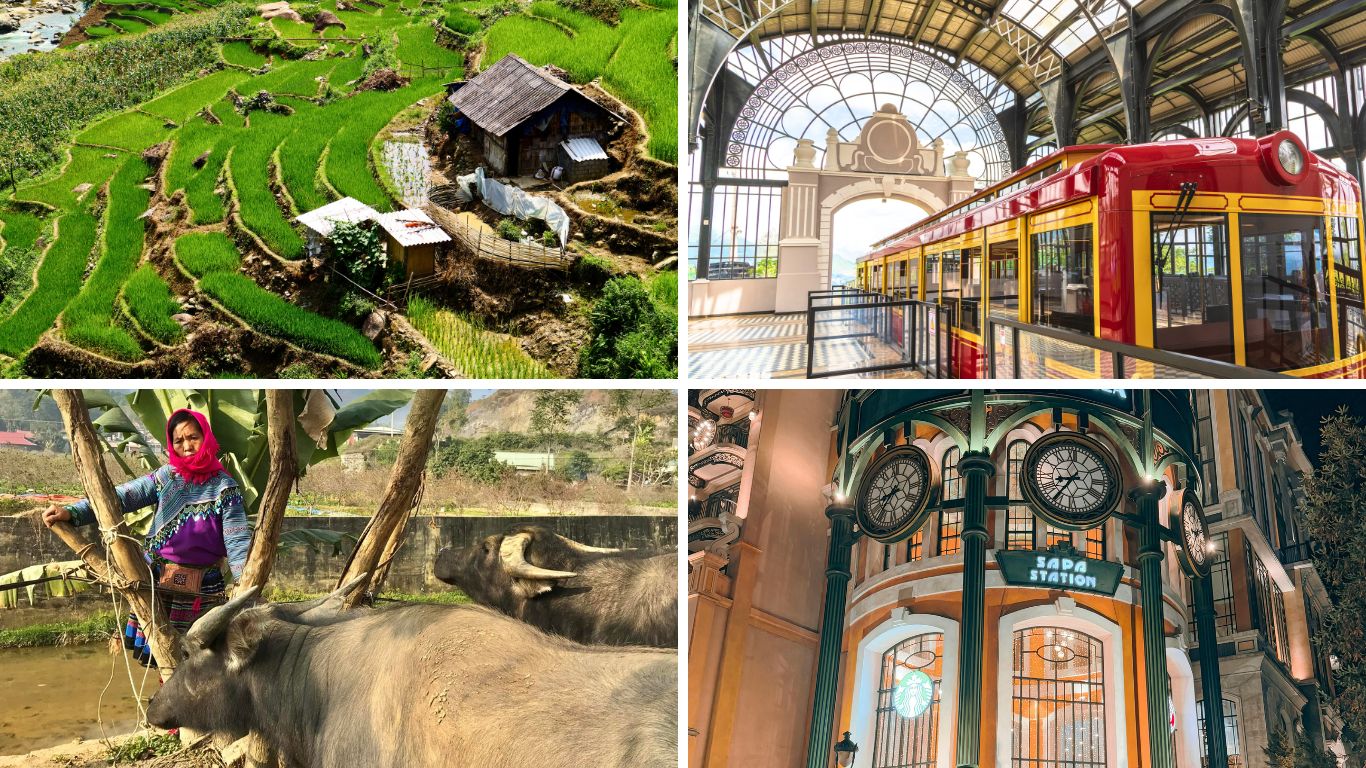
A full day in the hills around Sapa is the heart of the entire trip. Guided treks through Black Hmong and Red Dao villages let you walk through working rice terraces, cross bamboo bridges over rushing streams, and share tea in homes that have looked the same for generations. If trekking feels too demanding, a motorbike loop through the valley covers similar ground with less exertion and just as much scenery. End the day with a warm bowl of thang co at a local restaurant in Sapa town before catching the night train back to Hanoi.
Day 6: Return to Hanoi, Depart
Arriving back in Hanoi in the early morning, use the remaining hours for a proper breakfast and a final walk around the city. The Ho Chi Minh Mausoleum complex, the Temple of Literature, and the Vietnamese Women’s Museum are all within easy reach of the Old Quarter and worth a visit if time allows. From here, you are ready for your onward flight or the next chapter of your trip.
>> Find your package tour to North Vietnam: Essence of North Vietnam 6 Days
Why Book This as a Package
Booking Halong Bay and Sapa as a combined package through a single operator takes the logistics off your plate entirely. Cruise check-in, train tickets, hotel transfers, and trekking guides are all coordinated so you move between destinations without gaps or guesswork. It also tends to work out more cost-effectively than booking each element separately, and having one point of contact when plans need adjusting makes a real difference on the ground.
For a tailor-made Halong Bay to Sapa itinerary built around your dates and travel style, reach out to the Halong Junk Cruise team at resa@halongjunkcruise.com.
Extending the Trip: Where to Go Next
Six days is a solid foundation, but northern Vietnam rewards those who stay longer. Three natural extensions worth considering:
Ninh Binh sits about two hours south of Hanoi. It is often described as Halong Bay on land, with dramatic karst scenery rising from rice paddies and rivers. Adding two days here before Halong Bay eases you into the landscape beautifully and adds genuine variety to the itinerary.
Ha Giang lies northeast of Sapa and is home to the Dong Van Karst Plateau. It is one of the most remote and visually stunning landscapes in the country. The motorbike loop takes three to four days and is considered by many riders to be the best road trip in Southeast Asia.
Bac Ha works perfectly as a day trip or overnight stay from Sapa, timed to coincide with the Sunday market. Flower Hmong culture, colorful traditional dress, and a dramatic mountain setting make it one of the most memorable market experiences in northern Vietnam.
FAQs
What is the best time for a Halong Bay to Sapa tour?
Spring (March to May) and autumn (September to November) work best for both destinations. Autumn edges ahead for Sapa thanks to the golden harvest terraces.
How many days do I need?
Six days is the minimum, eight is the sweet spot. Ten or more lets you add Ninh Binh or Ha Giang to the mix.
How do I get from Halong Bay to Sapa?
Two options: a direct luxury sleeper bus with Phuc Xuyen (around 8 hours, 17 USD), or the more comfortable overnight train via Hanoi to Lao Cai, then 30 minutes by road up to Sapa.
Is Sapa suitable for non-trekkers?
Yes. Motorbike valley tours, local markets, and Sapa town itself offer a full experience without any serious hiking.
How cold does Sapa get?
Even in spring and autumn, evenings can drop to around 15 degrees Celsius or lower. A warm jacket is non-negotiable.
Can I book just the cruise and arrange Sapa independently?
Yes, though a combined package saves time and usually money, with one contact point if anything needs adjusting.